
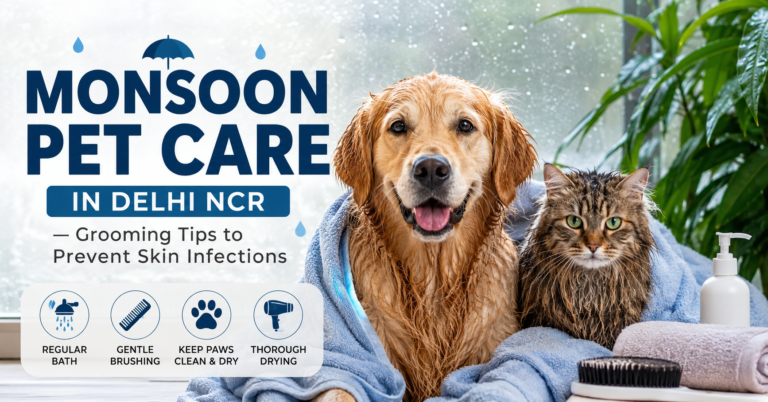
Monsoon pet grooming in Delhi is one of the most important things you can do for your dog or cat between July and September — and one of the most commonly neglected. Delhi’s monsoon brings relief from the heat, but it also brings a surge in pet skin infections, tick infestations, fungal problems, and bacterial conditions that most pet parents don’t see coming until the damage is already done. The combination of constant humidity, wet paws after every walk, standing water in parks and streets, and dense coat moisture creates conditions that bacteria, fungi, and parasites thrive in. This is your complete monsoon pet grooming checklist for Delhi NCR.
Why Monsoon Is the Hardest Season for Monsoon Pet Grooming in Delhi
Summer is harsh. Winter is dry. But monsoon is the season that catches Delhi pet parents most off guard — because the problems it creates are often invisible until they are already serious.
Here is what happens to your dog’s coat and skin during Delhi’s monsoon that doesn’t happen in any other season:
- Humidity prevents natural drying. In summer, a wet dog dries within 20–30 minutes. In monsoon, the ambient humidity means a wet undercoat can stay damp for 3–4 hours even indoors. That sustained dampness against the skin is what causes hot spots, bacterial infections, and fungal conditions to develop.
- Ticks reach peak activity. Delhi’s tick population explodes after monsoon rains. The warm, wet vegetation in parks, gardens, and green belts creates ideal breeding conditions. A dog that walks through a park in August carries significantly higher tick risk than the same dog on the same walk in February.
- Coats accumulate bacteria faster. The combination of moisture, heat, and outdoor debris means coats need more frequent professional cleaning during monsoon than any other season. A grooming interval that works in March may be inadequate by August.
- Standing water carries real disease. Leptospirosis — a bacterial infection transmitted through contaminated water — is significantly more prevalent in Delhi during monsoon. Dogs that walk through flooded areas or puddles are directly exposed.
Monsoon Pet Grooming Delhi — Complete Care Checklist
1. Dry your dog thoroughly after every single outdoor walk
This is the most important and most commonly skipped step in monsoon pet grooming in Delhi. Wet paws and belly fur left damp in Delhi’s humidity develop fungal infections and hot spots within 24–48 hours — sometimes faster in dogs with dense undercoats.
After every walk during monsoon, do this before anything else:
- Wipe down the paws with a dry towel, including between every toe — this is where moisture accumulates and ticks hide
- Dry the belly, groin, and underarm areas — fur here stays wet the longest and is closest to warm skin
- For dogs with dense or long coats, use a low-heat dryer on the paws and belly after towelling — do not rely on air drying during monsoon months
- Check the ear flaps for moisture — floppy-eared breeds like Cocker Spaniels and Beagles are at particularly high ear infection risk when ears get wet repeatedly
This takes 5 minutes per walk. The alternative is a vet visit for a hot spot or fungal infection that takes 2–3 weeks to resolve.
2. Check between the toes daily
This is the most commonly missed location in monsoon pet grooming for Delhi dogs — and the one that causes the most problems. Ticks particularly favour the warm, hidden space between toes during monsoon. They are small enough to miss on a quick visual check and often go undetected for days.
Every evening during monsoon, physically separate each toe on all four paws and check the skin between them. You are looking for:
- Small hard bumps (embedded ticks — they start the size of a sesame seed)
- Redness or irritation between the toes
- Moisture or matted fur that hasn’t dried from the morning walk
- Dark specks on the skin (flea droppings)
Two minutes every evening catches most problems before they become serious.
3. Increase professional grooming frequency during monsoon
Monsoon pet grooming in Delhi requires a shorter interval between professional sessions than the rest of the year. The damp conditions mean coats accumulate bacteria faster, ticks are more active, and the consequences of a delayed groom are more severe.
Our recommendation for monsoon months (July–September):
- All breeds: reduce your standard grooming interval by 1–2 weeks
- Heavy-coated breeds (Labrador, GSD, Golden Retriever, Pomeranian, Shih Tzu): professional grooming every 3–4 weeks rather than 6–8
- All breeds with outdoor access: monthly medicated tick treatment bath, minimum — regardless of standard grooming schedule
Book a professional monsoon grooming session at the start of monsoon (early July) and again midway through (mid-August). These two sessions cover the peak risk window.
4. Avoid puddles and flooded areas completely
Leptospirosis is a bacterial infection transmitted through water contaminated by infected animal urine — most commonly rats, which are more active in Delhi during monsoon. Standing water in streets, parks, and low-lying areas after rain is a direct exposure risk. Leptospirosis can be fatal in dogs if not caught and treated quickly, and symptoms — fever, lethargy, loss of appetite — are easy to mistake for a regular viral illness.
During monsoon, change your walking route if needed to avoid flooded areas, puddles, and standing water. If your dog does walk through contaminated water, wash their paws thoroughly with clean water immediately. According to PetMD, leptospirosis vaccination is available and strongly recommended for dogs in high-risk environments — speak to your vet if your dog regularly walks in areas with standing water during Delhi’s monsoon.
5. Keep ears clean and dry
Ear infections spike significantly during monsoon in Delhi — particularly in breeds with floppy ears. The warm, humid air combined with repeated moisture exposure from rain creates ideal conditions for bacterial and yeast growth in the ear canal.
During monsoon months, increase ear checks from every 2 weeks to weekly. After any walk where the ears got wet, gently dry the outer ear flap with a dry cotton pad. Signs of developing infection that need vet attention: dark discharge, persistent head shaking, scratching at the ear, or any odour from the ear canal.
6. Watch for hot spots — and act immediately
Hot spots (acute moist dermatitis) are one of the most common monsoon skin conditions in Delhi dogs. They appear as red, moist, painful patches on the skin — most commonly on the neck, behind the ears, on the back, or around the tail base. They develop fast — a small irritation in the morning can be a painful open sore by evening in monsoon humidity.
Hot spots are caused by moisture trapped against the skin — often from a wet coat that wasn’t dried properly, a mat that traps damp, or repeated scratching at a tick bite. If you notice one, do not wait. Clip the fur around the area, clean it with a pet-safe antiseptic, and consult your vet — hot spots require treatment to resolve and will worsen rapidly if left alone in humid conditions.
7. Post-monsoon — check the coat and skin thoroughly
After monsoon ends (usually late September in Delhi), the coat needs a thorough assessment. Many dogs that have been groomed regularly through monsoon still carry accumulated debris, dead undercoat, and potential early skin issues by the time October arrives. A post-monsoon professional grooming session is one of the most valuable sessions of the year — it clears everything that built up during the high-risk months and prepares the coat for the coming shedding season.
Monsoon Pet Grooming in Delhi — Breed-Specific Notes
Double-coat breeds (Labrador, German Shepherd, Golden Retriever, Husky)
The dense undercoat is the main problem during monsoon. It retains moisture for hours after walks and is the primary site of bacterial and fungal growth. Professional deshedding sessions every 3–4 weeks during monsoon remove the dead undercoat that traps this moisture. Never let a double-coat breed air-dry in monsoon — always blow-dry completely.
Long-coat breeds (Shih Tzu, Pomeranian, Lhasa Apso, Cocker Spaniel)
These coats mat rapidly in monsoon humidity. A mat that was manageable in June can become a solid, moisture-trapping clump by August. Increase home brushing to daily during monsoon, and reduce professional grooming intervals to every 4 weeks. The areas behind the ears, under the armpits, and around the collar are the first places to check for mat formation.
Short-coat breeds (Beagle, Indie dog, Boxer, Dobermann)
Lower coat-maintenance risk, but not zero. The main monsoon concerns for short-coat breeds are tick exposure and paw health. Daily paw checks, monthly tick treatment baths, and ear cleaning every week during monsoon are the primary requirements.
Cats
Indoor cats have lower monsoon risk than dogs, but long-haired cats can develop matting faster in humid conditions. Any cat with outdoor or balcony access needs the same paw checks and tick awareness as dogs. Persian cats in particular need daily brushing during monsoon — their coat mats in humid air even without outdoor exposure.
What a Professional Monsoon Pet Grooming Session in Delhi Includes
A professional monsoon grooming session from Tailsgroom is different from a standard session — it is specifically structured for the conditions your dog is living in during July–September in Delhi NCR.
What our monsoon sessions include:
- Medicated anti-tick and anti-fungal bath — targeted at the two main monsoon threats simultaneously
- Thorough paw cleaning — between every toe, including removal of debris and moisture that home cleaning misses
- Complete professional blow-dry — high-velocity drying that reaches the undercoat, not just the surface
- Full tick inspection — manual check of all tick-prone areas including between toes, inside ears, armpits, groin, and collar area
- Ear cleaning and assessment — outer ear canal cleaned and checked for early signs of infection
- Skin assessment — our groomers check for hot spots, redness, or early fungal signs at every monsoon session
- Home care advice — specific recommendations for your dog’s breed and monsoon risk level before we leave
The session happens at your home — which is particularly important during monsoon. Salon trips in the rain, wet dogs in cars, and exposure to other animals in a busy monsoon salon all add stress and risk that at-home grooming eliminates entirely. According to the American Kennel Club, humid conditions significantly increase the risk of bacterial and fungal skin infections in dogs — making professional grooming during high-humidity periods more important, not less.
Book a Monsoon Pet Grooming Session in Delhi with TailsGroom
Don’t wait until your dog is already scratching, shaking their head, or showing hot spots. Monsoon pet grooming in Delhi is most effective as prevention — scheduled at the start of monsoon, repeated midway through, and followed by a post-monsoon assessment in October.
Tailsgroom’s at-home dog and cat grooming service covers Delhi, Noida, Gurgaon, Greater Noida, Ghaziabad, and Faridabad. Same-days slots are usually available during monsoon.