
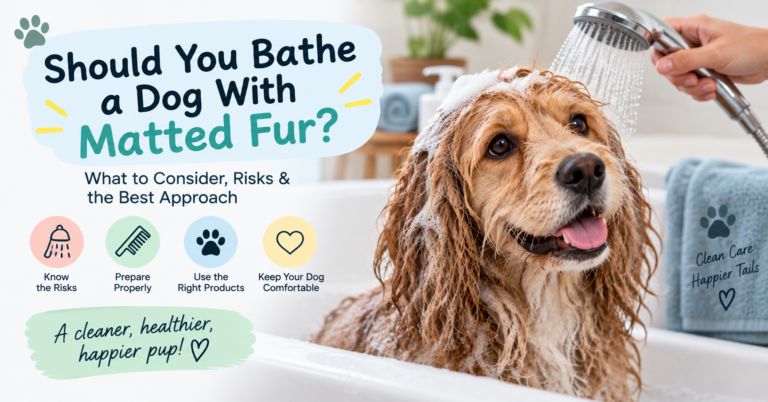
Bath time seems like the perfect opportunity to deal with tangled fur — a little shampoo and warm water, and surely the knots will loosen up, right? Unfortunately, it’s the opposite. If you bathe a dog with matted fur before addressing the tangles first, you can actually make the mats tighter, harder to remove, and more uncomfortable for your dog.
This guide explains exactly why water makes matting worse, what should happen before a bath, and how to build a bathing routine that protects your dog’s coat instead of damaging it.
Table of Contents
- The Short Answer
- Why Water Makes Mats Worse
- What Happens If You Bathe Over Matted Fur
- Dog Mats Before Bath: What to Do First
- How to Check for Hidden Mats Before Bath Time
- When It’s Okay to Bathe With Minor Tangles
- When You Should Skip the Bath Entirely
- How to Bathe a Dog Without Worsening Mats
- Drying: The Step Most Pet Parents Skip
- Building a Mat-Free Grooming Routine
- When to Call a Professional Groomer
- Frequently Asked Questions
The Short Answer
No — you should not bathe a dog with matted fur without addressing the mats first. Water causes hair to swell and shrink slightly as it dries, which pulls tangled strands even tighter together.
What starts as a loose, manageable knot before a bath can turn into a dense, skin-level mat afterward. In many cases, a mat that could have been combed out beforehand needs to be shaved out after a bath because it’s tightened so much.
The safest approach is always the same: address dog mats before bath time, not after.
Why Water Makes Mats Worse
It’s a common assumption that shampoo and warm water will help loosen tangled fur. In reality, the opposite tends to happen, for a few specific reasons.
Wet Hair Swells and Shrinks
Hair strands absorb moisture and swell slightly when wet, then contract again as they dry. When fur is already tangled, this swelling-and-shrinking cycle pulls the strands inside a mat closer together, tightening the knot.
Shampoo and Water Add Friction
Massaging shampoo into the coat, even gently, causes fur to rub against itself. On clean, brushed fur this is harmless. On fur that’s already knotted, it encourages more strands to twist into the existing tangle.
Towel Drying Compounds the Problem
Rubbing a towel over wet, matted fur creates even more friction, pulling loose hairs into the mat and tightening it further before you’ve even reached for a brush.
Mats Trap Water Against the Skin
Because mats sit close to the skin and block normal airflow, they hold onto moisture long after the rest of the coat has dried. This creates a damp environment that can lead to skin irritation, odor, or infection. The American Kennel Club recommends brushing out tangles before bathing for exactly this reason.
What Happens If You Bathe Over Matted Fur
Skipping the pre-bath brushing step doesn’t just make future grooming harder — it can create problems that go beyond a tangled coat.
- Existing mats tighten and pull the skin, sometimes to the point of causing visible discomfort
- Loose fur gets welded into the mat, creating a bigger, denser knot than before
- Trapped moisture lingers under the mat, raising the risk of hot spots, odor, or skin infections
- Removal becomes more difficult, often requiring a groomer to shave the area instead of simply combing it out
In short, a bath doesn’t clean the fur inside a mat — it just locks the tangle in place more firmly.
Dog Mats Before Bath: What to Do First
Before your dog goes anywhere near water, take a few minutes to prepare the coat properly.
- Do a full-body brush-through, paying close attention to high-friction areas like behind the ears, under the collar, the armpits, and the tail base.
- Use a detangling spray or leave-in conditioner on any areas with existing knots to loosen them before combing.
- Work through tangles with a wide-tooth comb, starting at the edges of the knot and working inward.
- Remove any mats you can safely reach using a dematting tool rather than forcing them out with a brush.
- Reassess the coat once combing is done — if any mats remain tight or close to the skin, hold off on bathing that area until they’re addressed.
This short prep routine is the single most effective way to avoid making mats worse during bath time.
(For a step-by-step removal method, see our guide on how to remove dog mats safely.)
How to Check for Hidden Mats Before Bath Time
Some mats hide in areas that are easy to overlook during a quick once-over. Before a bath, run your fingers through these commonly missed spots:
- Behind the ears — a frequent mat hotspot due to collar friction and softer undercoat
- Under the front legs (armpits) — constant movement creates friction here
- Around the collar line — collars rub against this fur throughout the day
- The base of the tail — often overlooked but prone to matting, especially in longer-coated breeds
- Between the toes and paw pads — moisture and debris collect here easily
A quick check of these five areas takes less than a minute and can save you from an unpleasant surprise mid-bath.
(Behind the ears is one of the most frequent trouble spots — see our full breakdown in Why Does My Dog’s Fur Get Matted Behind the Ears?.)
When It’s Okay to Bathe With Minor Tangles
Not every loose tangle needs to be fully removed before bathing. It’s generally fine to proceed with a bath if:
- The tangles are small and loose, not tight or close to the skin
- You’ve already combed through the area and it separates easily
- The coat overall is well-maintained with just a few minor knots
In these cases, a light detangling spray applied before the bath is usually enough to keep things from worsening.
When You Should Skip the Bath Entirely
Postpone the bath and address matting first if:
- Mats are tight, thick, or sit directly against the skin
- You notice several mats spread across different areas of the body
- The skin underneath a mat looks red, irritated, or has an odor
- Your dog reacts with pain or resistance when the matted area is touched
In these situations, bathing first will only make the eventual mat removal more difficult — and more uncomfortable for your dog. The ASPCA’s general dog care guidance also recommends addressing skin irritation before introducing water or shampoo to an affected area.
How to Bathe a Dog Without Worsening Mats
Once mats are addressed, a few adjustments to your bathing technique help keep the coat tangle-free.
Use lukewarm water, not hot. Hot water can dry out the coat and skin, making fur more prone to tangling as it dries.
Apply shampoo in the direction of hair growth. Massaging shampoo in circular motions against the grain of the coat increases the chance of new tangles forming.
Use a conditioner suited to your dog’s coat type. Conditioner adds slip to the fur, reducing friction and making post-bath brushing significantly easier.
Avoid vigorous towel rubbing. Blot and squeeze water out instead of rubbing the towel back and forth across the coat.
Drying: The Step Most Pet Parents Skip
Drying is just as important as pre-bath brushing when it comes to preventing new mats from forming.
- Brush while damp, not soaking wet. Fur is easier to work through once it’s no longer dripping but still slightly damp.
- Use a blow dryer on a low, cool setting if your dog tolerates it, brushing in small sections as you go.
- Focus on dense areas like behind the ears, the chest, and the hindquarters, where trapped moisture lingers longest.
- Don’t let your dog air-dry completely on their own if they have a longer or curlier coat — unmanaged drying is one of the most common causes of new mats forming right after a bath.
Building a Mat-Free Grooming Routine
Consistent grooming outside of bath time is the best long-term defense against matting.
- 2–3 times per week (short or medium coats): Full-body brush, with extra attention to high-friction zones
- Daily (long or curly coats): Quick comb-through, especially behind the ears and under the legs
- Before every bath: A full detangling session, no exceptions
- After every bath: Thorough brushing and drying before your dog is left to relax
This kind of consistent dog grooming routine turns bath time from a matting risk into a simple maintenance step.
When to Call a Professional Groomer
Some matting situations are better handled by a professional than at home. Consider booking a groomer if:
- Mats are widespread or difficult to reach safely
- A mat is tight against the skin and won’t loosen with combing
- Your dog is uncomfortable or anxious about being handled near the tangle
- You’re unsure whether it’s safe to bathe a particular area at all
A professional groomer can assess the coat, remove problem mats safely, and recommend a bathing schedule tailored to your dog’s coat type. The National Dog Groomers Association of America can help you locate a certified groomer nearby.
Frequently Asked Questions
Can I bathe a dog with a few small mats? Yes, as long as the mats are small, loose, and not close to the skin. Apply a detangling spray beforehand and comb through gently after drying.
Will shampoo help loosen mats during a bath? No. Shampoo and water tend to tighten existing mats rather than loosen them. Mats should be addressed with a comb and detangling spray before bathing, not during.
How long should I wait after brushing out mats before bathing? You can bathe immediately after removing mats — there’s no need to wait, as long as the coat has been thoroughly combed through first.
What’s the best way to prevent new mats from forming after a bath? Brush your dog’s coat while it’s still slightly damp and dry it fully, focusing on dense or high-friction areas like behind the ears and under the legs.
The Bottom Line
Bathing feels like a natural way to deal with a tangled coat, but water almost always makes matting worse, not better. Addressing dog mats before bath time — through thorough brushing, detangling spray, and careful drying — protects your dog’s skin and saves you from a much harder removal job later. A few extra minutes of prep before every bath is one of the simplest habits in good dog grooming.