
If you’ve ever found a tick on your dog, you know that unsettling feeling — not sure how long it’s been there, how many more you might have missed, or whether your dog is already unwell because of it.
Ticks and fleas are one of the most serious and most commonly ignored pet health problems in Delhi NCR. Most pet parents only notice once the infestation is already heavy. By that point the dog has been uncomfortable for weeks — and sometimes the health damage has already started.
This guide covers what to look for, why it matters more than most people realize, and what actually works when it comes to treatment.
Why Delhi NCR Dogs Are Particularly at Risk
Delhi NCR has specific conditions that make tick and flea problems more common here than in many other Indian cities.
Delhi’s parks, green belts, roadside vegetation, and colony gardens support large tick populations throughout the year. Numbers peak after the monsoon — roughly August through October — when warm, humid conditions create ideal breeding environments for both ticks and fleas at the same time.
Any dog that walks in parks, plays in a garden, sits on grass, or has any contact with stray animals is at consistent risk. This includes apartment dogs who only go out for short daily walks — ticks attach quickly and are small enough to miss on a routine check.
The risk doesn’t disappear in winter either. Ticks remain active in Delhi until temperatures drop significantly — which means they’re a real concern for most of the year.
Early Signs of Tick or Flea Infestation
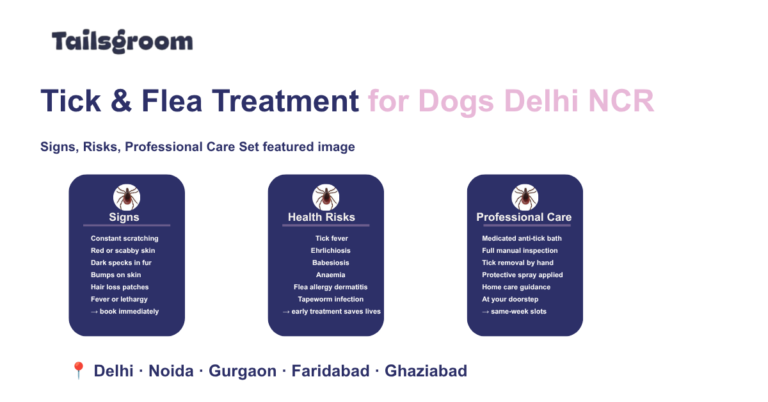
The earlier you catch this the simpler and cheaper the treatment. Here is exactly what to look for:
Constant Scratching
Particularly around the ears, neck, and base of the tail. This is usually the first sign — and it’s often dismissed as dry skin or seasonal allergies. If the scratching is persistent and focused on these areas, check for ticks and fleas first.
Red or Scabby Skin
Part the fur in areas your dog is scratching and look directly at the skin. Active bites leave red, irritated patches and sometimes visible scabs from repeated scratching.
Dark Specks in the Fur
Small dark moving specks or pepper-like dots on the skin confirm fleas. These are flea droppings. If you’re unsure — place some on a damp white tissue. Flea droppings turn reddish brown because they contain digested blood. That’s your confirmation.
Bumps Embedded in the Skin
These are ticks. They start tiny — roughly the size of a sesame seed — and grow significantly as they feed. Common hiding spots are around the ears, between the toes, in groin folds, around the collar, and in the armpits. Always check these areas after park visits.
Patchy Hair Loss or Inflammation
This indicates the infestation has been going on for some time and needs professional attention immediately.
Fever, Lethargy, or Restlessness
In cases of heavy infestation these systemic signs mean the dog’s body is already under serious stress. This needs a vet visit alongside grooming treatment — do not delay.
The Real Health Risks — This Is the Part Most People Underestimate
Ticks and fleas are not just an irritation. Left untreated they cause serious, sometimes life-threatening medical conditions.
Tick Fever
Ticks in Delhi NCR transmit diseases including ehrlichiosis and babesiosis — blood-borne illnesses that can be fatal if not diagnosed and treated quickly. Symptoms include high fever, loss of appetite, lethargy, and pale gums. Many pet parents mistake early tick fever for a regular viral illness. By the time the correct diagnosis is made, the dog is often seriously unwell.
Anaemia
A dog carrying a heavy tick load loses blood continuously. In smaller dogs especially, this accumulates into genuine anaemia — weakness, pale gums, and in severe cases collapse.
Flea Allergy Dermatitis
Some dogs develop a chronic allergic reaction to flea saliva. A single flea bite triggers intense, prolonged itching and skin inflammation. Dogs with this condition scratch until they break the skin, leading to painful secondary infections.
Tapeworm Infection
Fleas carry tapeworm larvae. When a dog swallows an infected flea during self-grooming — which happens constantly and invisibly — the tapeworm establishes itself in the digestive tract and causes long-term digestive problems.
The consistent pattern here is simple — treating an active tick or flea infestation costs a fraction of what treating the resulting illness costs. Early treatment is always the better option.
Home Remedies vs Professional Treatment — What Actually Works
Coconut oil, neem paste, and diluted vinegar are popular home remedies for ticks in Delhi. They are not entirely useless — they can temporarily repel surface ticks and are fine as a supplementary measure between professional sessions.
But they do not work against established infestations. They provide no residual protection after application. And they cannot reach ticks that are already embedded in skin or hiding deep in ear folds and between toes.
Professional dog grooming tick treatment is different in two important ways. First, medicated anti-parasitic shampoos and sprays kill ticks and fleas on contact rather than just repelling them. Second, a trained groomer manually inspects the entire coat — finding hidden ticks in spots that home treatment misses entirely.
That combination of medicated treatment plus thorough manual inspection is what makes professional treatment genuinely effective rather than temporary.
How TailsGroom Performs Tick Treatment at Your Home
Our groomer arrives with professional-grade, pet-safe anti-tick shampoo and spray — everything needed for a complete treatment session at your doorstep.
Here is exactly what happens during the session:
Step 1 — Medicated Bath
The dog receives a thorough anti-tick shampoo bath with extended soak time. This allows the medicated formula to penetrate through the coat and work against ticks and fleas across the entire body — not just the surface.
Step 2 — Manual Inspection
After rinsing, the coat is inspected section by section by hand. Ears are checked inside and around the folds. Toes are separated and checked individually. Skin folds, groin, armpits, and collar area are all examined. Any visible remaining ticks are carefully removed.
Step 3 — Blow Dry
The coat is fully dried using a professional blow dryer. This is important — a damp coat after treatment can cause skin irritation, especially in Delhi’s humidity.
Step 4 — Protective Spray
A pet-safe anti-tick spray is applied to the dried coat to provide short-term residual protection after the session.
Step 5 — Home Care Advice
Before leaving, our groomer explains what to watch for over the next few days and recommends how frequently to repeat treatment based on your dog’s outdoor activity and your specific area in Delhi NCR.
The entire session happens at your home. No travel stress for your dog. No exposure to other animals. You can watch the process throughout.
This is part of TailsGroom‘s doorstep dog grooming service — no separate booking needed if you want it combined with a full groom.
Prevention Between Professional Sessions
Professional treatment handles the current infestation. Keeping it from coming back needs some consistent habits at home.
Monthly prevention from your vet
Tick prevention tablets and spot-on treatments are now widely available and significantly reduce infestation risk between professional sessions. Ask your vet which product suits your dog’s size and lifestyle.
Check after every park visit
Ears, between the toes, around the collar, and groin folds are where ticks hide first. A two-minute check after every walk is enough to catch most ticks before they fully embed.
Avoid dense vegetation after rain
Tick activity is highest in wet grass and undergrowth. If your dog does walk through this, check thoroughly when you get home.
Wash pet bedding weekly in hot water
Flea eggs survive in fabric and re-infest your dog after treatment if bedding is not cleaned regularly.
Vacuum carpets and furniture regularly
Flea eggs and larvae live in carpets, rugs, and soft furnishings for months. Regular vacuuming breaks the re-infestation cycle after treatment.
Book Tick & Flea Treatment at Home in Delhi NCR
If your dog is scratching constantly, you have found ticks, or you want a thorough professional inspection before monsoon season — TailsGroom provides complete tick and flea treatment as part of or alongside our dog grooming service.
We serve Delhi, Noida, Gurgaon, Faridabad, and Ghaziabad — same-week slots are usually available.
📞 Call or WhatsApp: 9220234013
Not sure whether what you are seeing is ticks, fleas, or a skin issue? Message us with a description or photo before booking. We will help you figure out exactly what your dog needs.